Roles defined. Approvals routed to the people accountable for them.
Exercise management starts as a chain of authority, not a chain of email.


Simulations & Training Exercise Support
Scroll through one exercise with Fluyenta underneath it: every approval attributed, every piece of field evidence sealed, the record building itself while the exercise runs.

06:00. THE BRIEFING TENT.
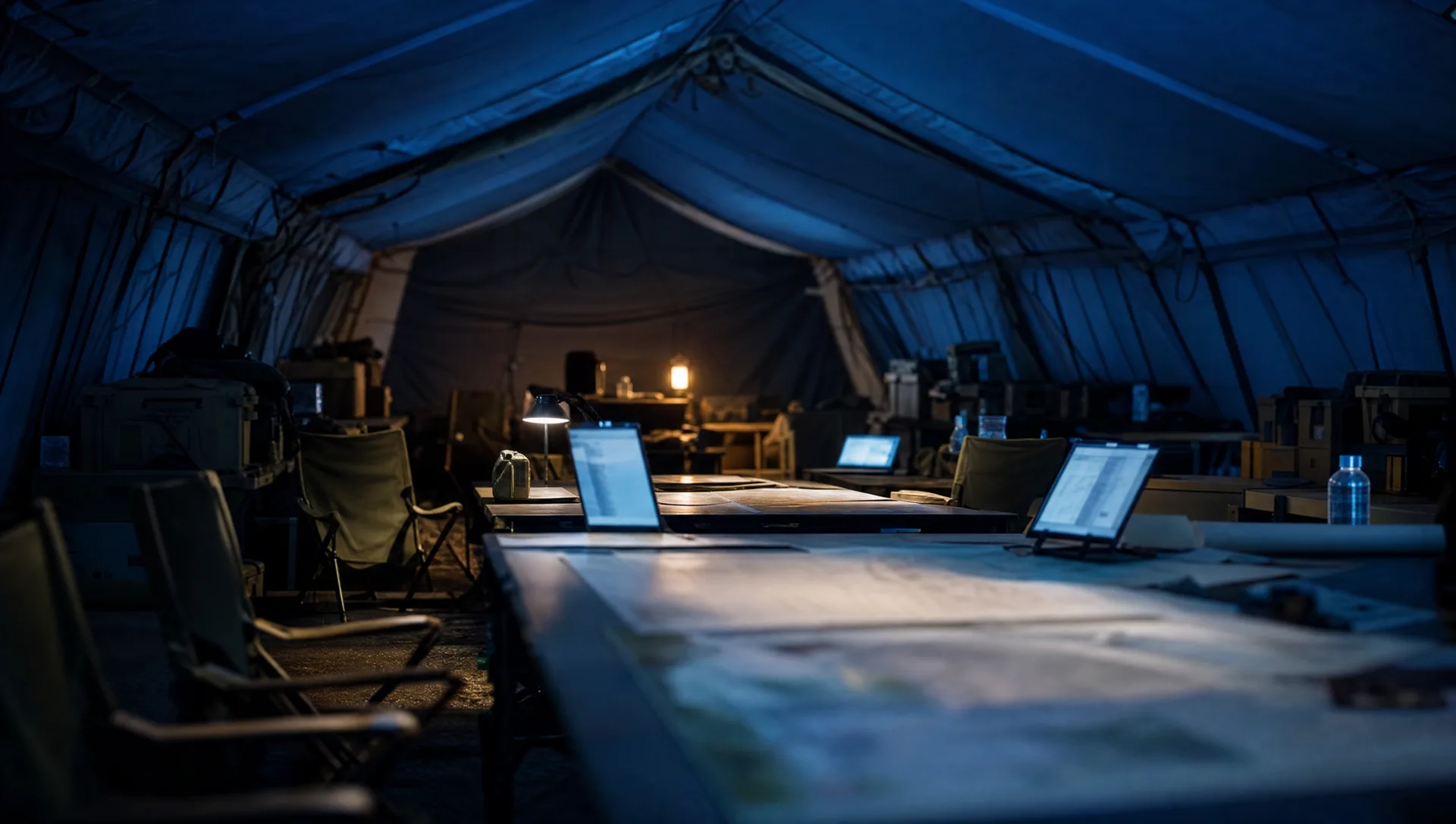
Approval Chain · Active
Sign-Off · Attributed
01 · The Plan
Roles defined. Approvals routed to the people accountable for them.
Exercise management starts as a chain of authority, not a chain of email.
Every sign-off attributed and timestamped the moment it happens.
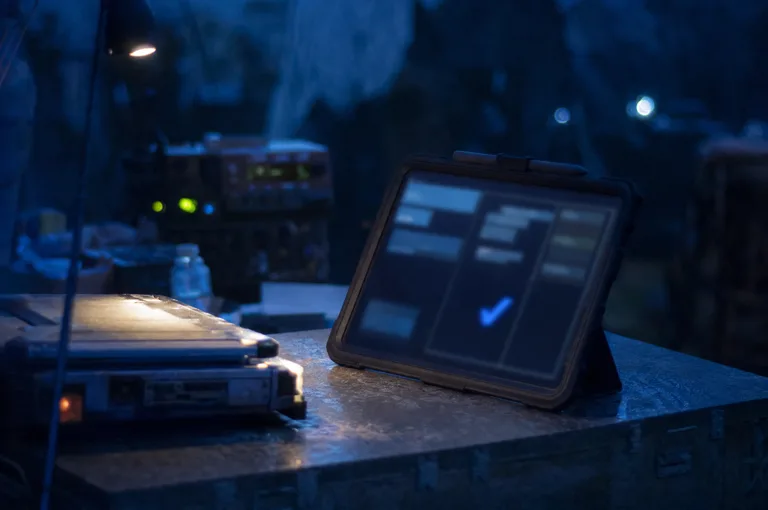
No approval lives in an inbox. The plan and its authority are one record.
Approval routing is role-based, not name-based. An exercise plan names the roles that must sign: planning lead, safety review, resourcing, final authority. Fluyenta resolves each role to the person holding it when the step becomes due, so a change of personnel never breaks the chain. Delegation is explicit: a role holder can hand approval authority to a named deputy for a defined window, and the record shows both names. Absence handling works the same way, routing to the configured alternate instead of stalling in a vacant inbox. Hierarchies nest: a range approval can require its own sub-chain before the exercise-level chain continues. Every sign-off is stamped with the approver, the role they held, and the platform time at the moment of action, and the stamp is written into the sealed record rather than a mailbox. All of this routing is set up in a low-code, no-code builder: chains, delegations, and alternates are configured rather than hard-coded, so changing the approval model is a configuration change instead of an engineering release. The plan, its authorities, and its history stay one navigable object.
GOLDEN HOUR. THE RANGE.

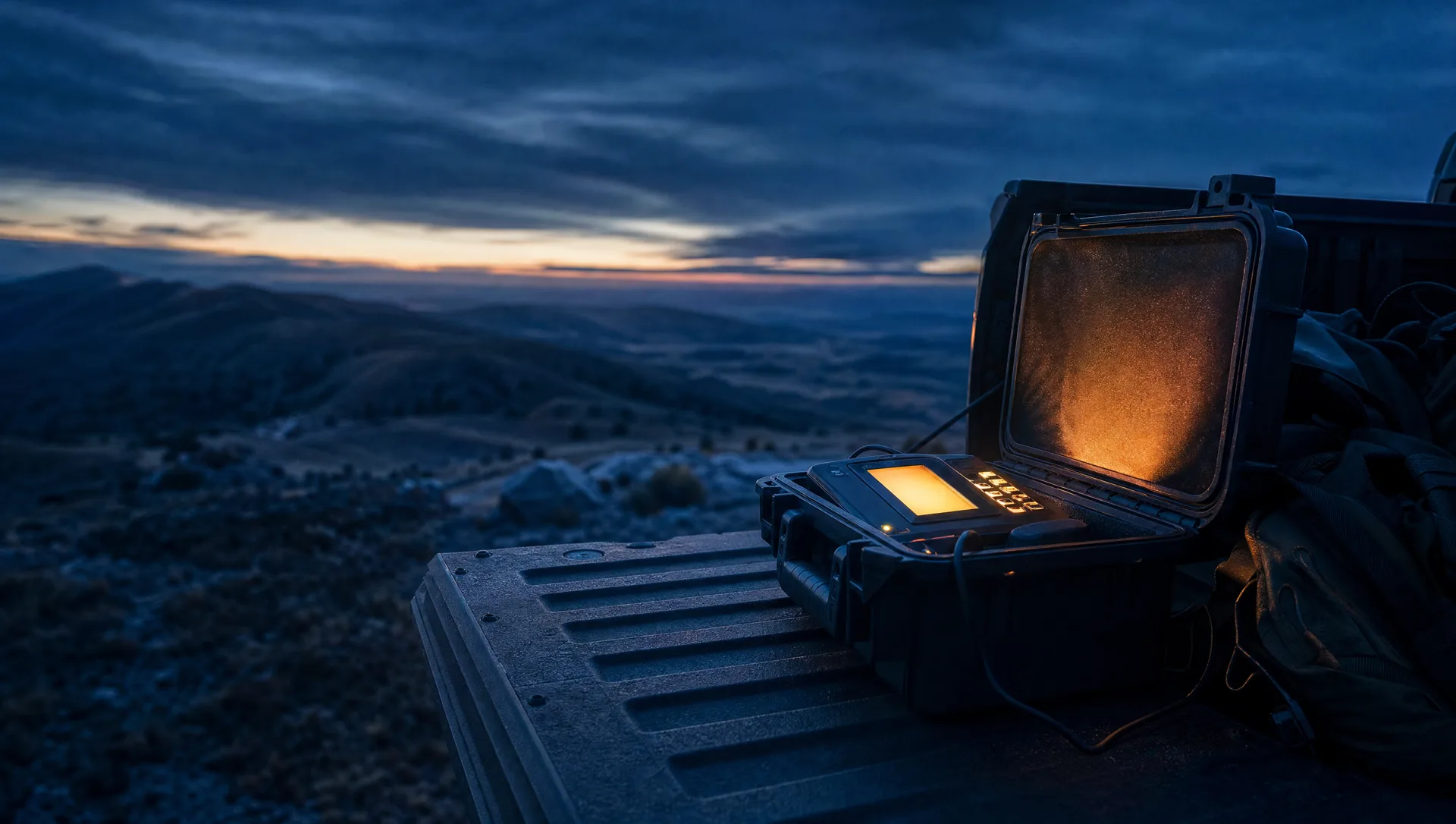
Field Capture · Live
Sync · Pending → Complete
02 · The Field
Photos, GPS, timestamps, signatures, sealed at the point of work.

No signal, no problem. Fully offline-capable, syncing the moment a connection returns.
Offline field data collection on rugged or standard devices, with original timestamps kept intact.
Nothing waits for the drive back. Nothing depends on memory.
Field capture covers photographs, GPS coordinates, capture time, handwritten signatures, and structured forms with required fields, so an evaluator cannot accidentally submit half a record. Everything runs on rugged or standard iOS and Android devices, with a browser fallback for laptops at a field desk. Offline mode is the default assumption, not a special case: records are written to encrypted local storage the moment they are captured, stamped with the device time and position, and queued. When connectivity returns, the queue syncs automatically in the background. Conflicts are resolved conservatively: if two versions of the same record exist, both are preserved and flagged for a human to reconcile, and nothing is silently overwritten. A capture that fails validation stays editable in the field; a capture that passes is sealed and can no longer be quietly amended. The device is replaceable; the record is not.
Own the plan, chase the sign-offs, absorb the blame for delays.
Approvals route themselves; the plan and its authority stay one record.
Capture everything in the mud, then retype it all back at the desk.
Capture once at the point of work; sync handles the rest.
Answer for the exercise without a complete record of it.
A sealed, attributed record that stands up under oversight.
The exercise ran on discipline. For once, the record did too.
Built on 21 years of enterprise workflow heritage.
Two decades spent running enterprise approvals and process automation.

22:40. THE RECORD IS ALREADY DONE.
Exercise Record · Assembling
Human Gate · Waiting
03 · The Return
Every sealed record from the field lands in one place, already attributed, already in order.
Governed AI reads documents and transcriptions, flags gaps and drift, and waits for a human gate. Nothing autonomous, everything accountable.
EVERY INPUT SEALED. EVERY OUTPUT ACCOUNTABLE.
Every connection configured, not coded.
The after-action package assembles from the records the exercise already produced. Sealed approvals, field evidence, structured forms, and debrief transcriptions land in one workspace, ordered on a single timeline and grouped by objective. The governed document intelligence layer reads documents and transcriptions, performs structured extraction, and compares what the plan required against what the record contains. It flags gaps, for example an objective with no supporting evidence, drift between the planned sequence and the captured timeline, and evidence that arrived without its required sign-off. Every flag is a suggestion in a review queue, never an edit: a human reviewer accepts, rejects, or annotates each one before anything enters the package, and the reviewer's decision is itself attributed and timestamped. The draft package is complete when its checklist is green, and the finished document exports with its supporting records attached rather than summarized away.

SIX MONTHS LATER. THE PHONE RINGS.


Exercise Record · Sealed
Retrieval · Minutes
04 · The Audit
Weeks of pulling emails. Chasing sign-offs. Rebuilding timelines that oversight then gets to question.
An exercise run on Fluyenta answers in minutes: one platform oversight can walk through, every record sealed the moment work happened.
An oversight walkthrough starts from the exercise record, not from a request for documents. A reviewer with read access opens the sealed trail and filters it by role, by date range, or by record type: approvals only, field evidence only, AI flags and their human decisions. Each record shows who created it, who signed it, and when, with its original timestamps preserved from the field. The timeline view rebuilds the exercise hour by hour from sealed records, so the question behind most findings, what actually happened and who knew, is answered by inspection instead of interviews. The full trail, or any filtered slice of it, exports as a signed package for the oversight body's own files. Nothing in the export path can modify a sealed record: the platform separates reading the record from touching it, which is exactly the distinction an auditor cares about.
05 · The Standard
Simulations that are affordable to stand up and easy to change.
Build and adapt exercise workflows with configuration, not custom code. No hard-coding, and no engineering rebuild every time the scenario changes.
Stand up a working prototype of the exercise flow, then promote the same build to the live exercise. One platform from first draft to the real thing.
Ready connectors for the apps, integrations, datasets, and hardware you already run, so the exercise plugs into your environment instead of replacing it.
Planning, approvals, field evidence, governed document intelligence, and after-action reporting run on one platform instead of five. Role-based controls decide who can see and sign what, every action lands in the audit trail attributed and timestamped, and every AI output waits at a human gate. One system to operate, one governance model to defend.
Simulation and training exercise support software governs the administrative record of a training exercise: approvals, field evidence, and after-action reporting. Fluyenta is the workflow platform underneath the exercise, routing sign-offs by role, sealing evidence at the point of work, and assembling the after-action package from those records. The exercise file ends up complete, attributed, and ready for review.
Yes. Fluyenta is offline-ready for field data collection: photos, GPS coordinates, timestamps, signatures, and checklists are captured on rugged or standard mobile devices with no connection at all. Records seal locally with their original timestamps and sync automatically the moment the device is back in range.
An audit-ready training exercise record shows what happened, who approved it, and when, without reconstruction. Fluyenta builds that record by construction: every approval is attributed and timestamped, every piece of field evidence is sealed the moment it is captured, and the after-action package assembles itself from those sealed records. When oversight asks, the answer is already in the file.
Fluyenta uses governed document intelligence: structured extraction from documents, transcription, and drift and anomaly flagging. It is not autonomous: every AI output waits at a human gate before it enters the record, and people stay accountable for every decision.
Fluyenta is certified to ISO 27001:2022 for information security management and ISO/IEC 27701:2019 for privacy information management, and its data handling is GDPR aligned. The company is US-owned, WOSB certified, and an AWS Qualified Software Partner.
A first Fluyenta deployment is a configuration exercise, not a software build: approval routes, evidence checklists, and after-action templates are modeled on how the organization already runs its exercises. A training organization can start with a single exercise workflow and expand from there as the record proves itself.
Fluyenta uses a low-code, no-code approach, so exercise workflows are configured rather than hard-coded. Teams stand up a working prototype of the exercise flow and promote that same build to the live exercise on one platform. Existing apps, datasets, and hardware connect through ready connectors, so the exercise plugs into the environment already in place.
Fluyenta seals every record at the moment of capture: the content, its author, and its original timestamps are locked together, and a sealed record cannot be quietly amended. Later corrections are new records that reference the original, so the trail shows both the evidence and its history. Conflicting versions are preserved and flagged for human reconciliation, never silently overwritten.
Fluyenta is built to sit alongside the systems a training organization already runs, not replace them. It exchanges data through standard interfaces: structured exports, document ingestion, and API-based integration, so range schedules, planning documents, and existing reporting formats can flow into the governed record. Integration scope is defined during configuration, in capability terms rather than rip-and-replace terms.
Fluyenta's data handling is GDPR aligned, and the platform is certified to ISO 27001:2022 for information security management and ISO/IEC 27701:2019 for privacy information management. Data residency is a configuration decision made with the organization during deployment, so records can be kept in the jurisdiction the organization requires.
Fluyenta is built on RunMyProcess, an enterprise workflow platform with 21 years of heritage running approval and process automation for large enterprises. That heritage means the routing, audit, and integration foundations under Fluyenta are mature, production-proven technology, not a first release.
Building the record while the work happens, instead of reconstructing it afterward. In Fluyenta, every approval and capture writes itself into the exercise file at the moment of action.
A record locked at the moment of capture, with its content, author, and original timestamps bound together. Sealed records cannot be quietly amended; corrections become new records that reference the original.
A required human decision point in front of every AI output. Nothing the AI extracts or flags enters the record until a named person accepts it.
Document intelligence that works under explicit rules: structured extraction, transcription, and drift and anomaly flagging, always behind a human gate. Governed AI in Fluyenta suggests; people decide.
The assembled documentation of a completed exercise: timeline, evidence, approvals, and findings. In Fluyenta it assembles from sealed records instead of being written from memory.
The complete, attributed sequence of who did what and when. In Fluyenta the audit trail is a byproduct of running the exercise, ready before anyone asks for it.